
West African Fish Rice
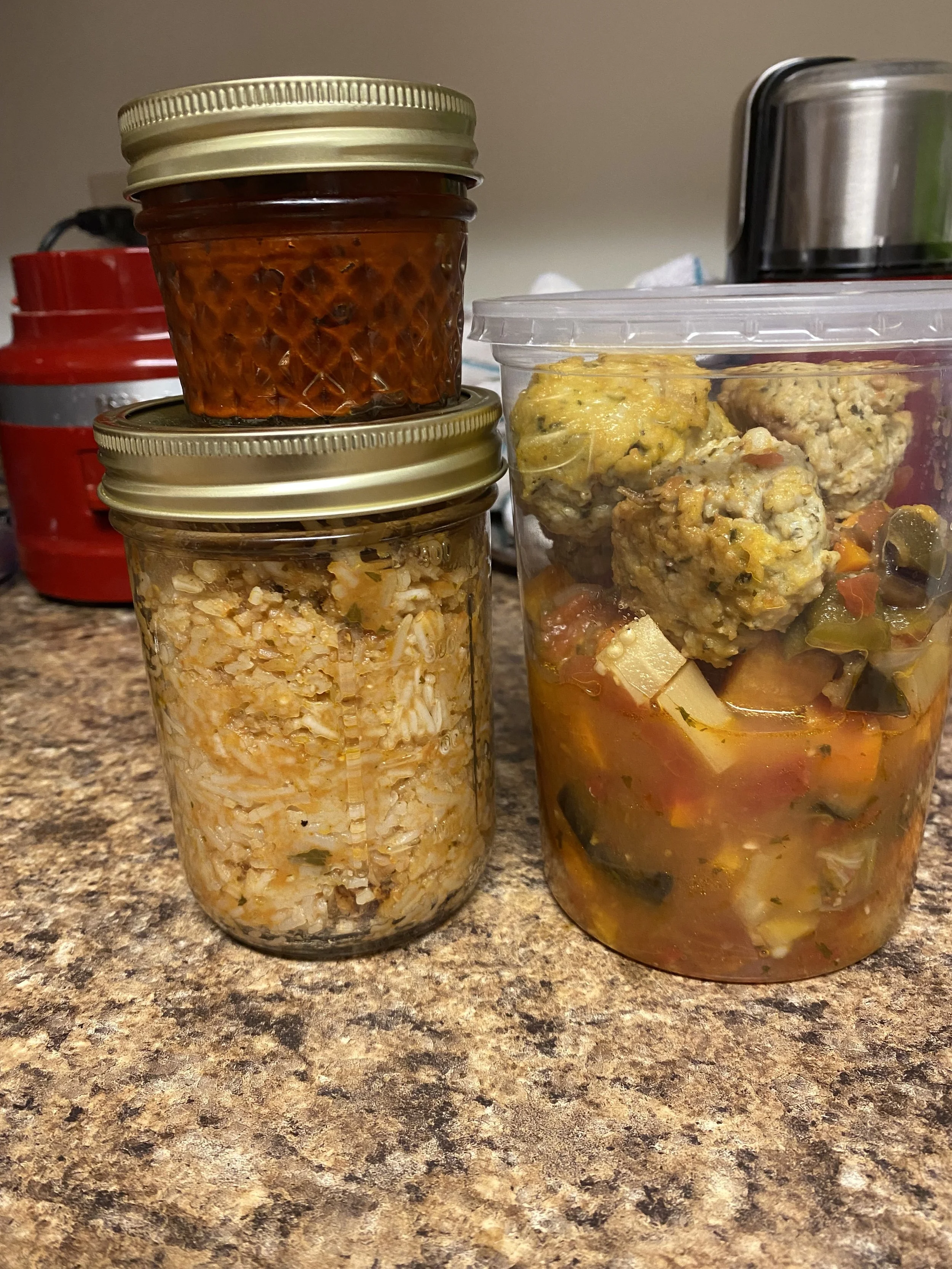
A container of Jollof rice, fish stew and harissa ready to share.
When I learned how to make the iconic West African dish Chebu Jen (Thieboudienne), the internet was still fairly young. I had trouble finding out much about West African languages, cultures and cuisine. I had to learn by eating the food and asking many questions in several languages and ways. Charades are a wonderful thing.
The first time I made it, it was a last minute decision for a party being thrown in my honor as a recent bachelorette. It was to introduce me to the Mauritanian community in Chicago with plenty of bachelors in attendance. While my future husband didn’t attend, his roommate did. He told him all about the unusual ‘real’ American woman who was Mauritanian in her ways. He also mentioned my horrible attempt at the signature dish of both Mauritania and Senegal.
Thankfully the community looked past the crunchy bits of undercooked rice and dire need of salt. When I married and moved to Chicago, I redeemed myself with another, smaller party for my hosts and select guests. My new husband cooked the rice himself since I was not raised on rice. Rice a Roni or Uncle Ben’s was all I ever knew.
I served a platter and then went into the kitchen for two more plates. When I returned, I asked if it was okay. I prayed that I had redeemed myself. With full mouths, they nodded and scooped up the last bit before handing me the tray asking if there was any more. Thankfully there was plenty more. I eventually got to eat my coveted plate of fish rice which was delicious. Having those who have eaten it every day throughout their lives and devouring it was the only compliment I needed. I was welcome to cook for them anytime.
As with many meals, the ingredients and methods change with the cook and available resources. I have also altered the preparation depending on how and to whom I am serving it. Since I am single and surrounded by Americans, I have altered it slightly for them.
I like to use cilantro in place of parsley in many West African dishes for a bit more flavor. I vary the quantity and heat of the peppers I use depending on the diners. Habaneros are common in Senegal while jalapeños are used more in Mauritania. I am more in between in my everyday tastes but the searing heat of Senegalese cooking is so good sometimes.
My fish paste that is used to stuff the fish or make fish meatballs is the following put through a food processor.
Cilantro - about one bunch at the grocery store
Green onions - about half to one bunch
Garlic - as much as you like. I love it so I usually use 2 tablespoons of minced garlic.
Peppers - any pepper will do. One or two jalapeño is usually good. If you are daring, use a habanero.
Salt - use liberally as this will season the fish. I use around a half tablespoon.
Black pepper - a small amount
Use a whole fish with white flesh that is gutted and scaled. Poke holes into the skin and fill them with the fish paste. This keeps the paste in the fish easier than stuffing the inside.
If you’re making fish meatballs, use filets that have been skinned and deboned. Place them and enough fish paste to season them in the food processor. Process until well combined. Add a bit of flour and combine. Drizzle a little oil through the feed tube until you have a mixture that easily forms meatballs.
Heat oil in a stock pot or roaster and fry the fish and meatballs until done. Take them out and set aside.
The stew contains as many and whatever vegetables you enjoy. In West Africa they’re usually left large or whole, except for the basics of tomatoes, garlic and onions. In America, I cut them into bite size pieces for how we eat.
Add the chopped onions to the pot used for the fish, sweating them down in the oil. A little caramelization is fine. Just don’t burn them.
When the onions are good, add garlic, 5 tablespoons tomato paste (half a small can), any remaining fish paste, salt and black pepper. Cook through for a short time before adding the diced tomatoes. I generally use 2-4 large cans or one commercial one. It depends on how much vegetables and fish I have.
Add in the root vegetables that will take longer to cook and add the remainder according to the time needed to cook them.
When it’s done, remove the vegetables and discard the tamarind, if used. Reserve a bit of stock to heat the fish before cooking the rice in the remaining stock.
Serve by placing a bed of rice on the bottom; the vegetables; and then the fish on top. Lime or lemon wedges are a perfect accompaniment to squeeze on as desired. If you have made it mild, a jar of harissa can be served for those who prefer a bit more heat.
The usual vegetables
Tomatoes
Garlic
Onion
Hot Peppers
Tamarind pods - crushed open and the shell discarded
Carrots
Parsnips
Sweet potatoes
Additional vegetables - the sky’s the limit
Cabbage
Eggplant
Okra
Acorn squash
I have used fresh, frozen and canned vegetables. Sometimes one is cheaper or a needed time saver. Use what suits you, the season, availability and price.
As in life, there are few hard and fast rules to cooking. Experiment with different flavors and see what works for you and your dinners. It truly is a choose your own adventure.
